Showing posts with label Bee Hill. Show all posts

Monday, October 14, 2013

Link to Farmweek episode, comb honey, and an update

If you want to see the Farmweek TV segment featuring Mississippi beekeepers, click here.

It's mid-October, and Mark is finally harvesting honey, which is so late it's crazy. It's been a tough year, with an incredibly long, cool spring, several hive failures, and difficulty getting the weather needed to harvest.

Last week he pulled 12 supers. One of those was an experiment from last fall: a super with wax foundation instead of plasticell, with the hope the bees would give us solid honeycomb.


Mark managed to cut about 35 squares weighing about 14 oz. each. The honey is dark and robust, with pollen evident. If you want one of these boxes of comb honey, call or text Mark at 662.418.4422. Once they're gone, they're gone. $9 each, refill discount does not apply.

Today he left early to go to the Delta bee yard and harvest there. It will be fun to see and taste the differences in the varieties.

Friday, August 23, 2013

Filming for Farmweek

On Wednesday my colleague, Amy, asked if Mark would consent to be interviewed for Farmweek, a TV show produced by MSU's Office of Agricultural Communications, where I work in media relations. She said she was in a bind and really needed someone to help her out with finishing her beekeeping story.
I said yes. (We checked with our bosses about conflict of interest. I'm not on camera.)

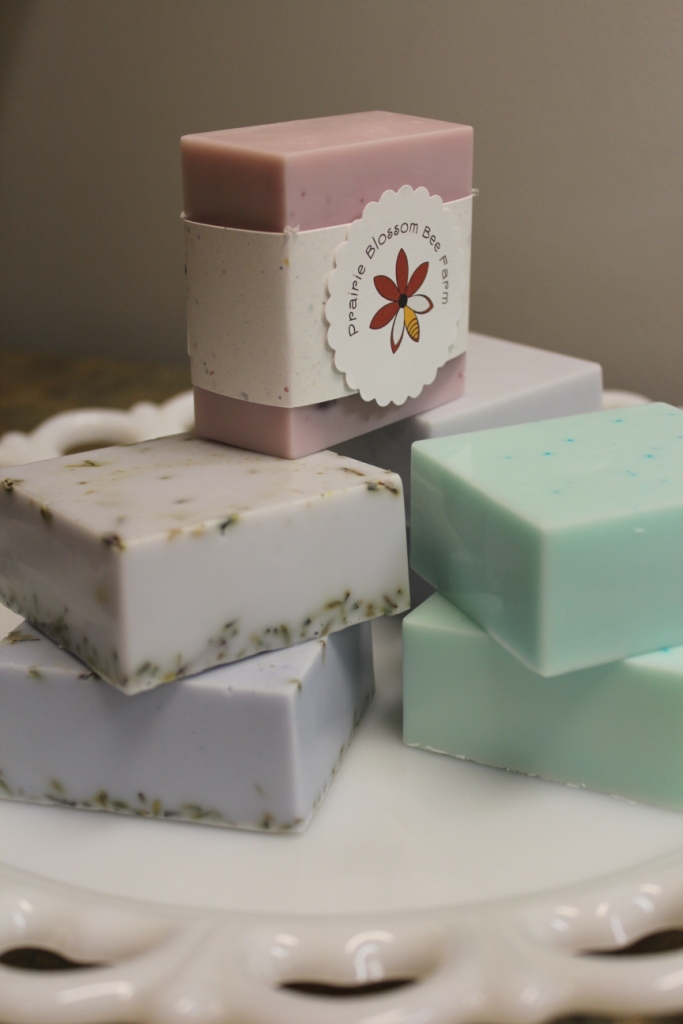
Then Thursday night I stayed up way past my bedtime -- til 10:30 p.m.! -- making soaps and candles to show that side of our beekeeping adventure.


She came over this afternoon, though there was a chance of rain.

Mark thought it would pass by south of us.

Watching the sky

Once she got him hooked up with a microphone and the interview began . . .


it started sprinkling.

But we pressed on.

Then the sky opened up and it poured. We grabbed all of the camera equipment and rode the 4-wheeler back to the house. We were drenched from head to toe.

Amy looked like an orphan wearing my clothes while hers dried. 

She filmed Mark in the honey room.


She is going to have to come back next week and film again. Originally I was going to be in the B-roll of the hive inspections, but now I'm not so sure. ;-)

On the positive side, I have several candles and bars of soap I can sell.

Saturday, June 22, 2013

The Second Day of Summer

I guess it's only fitting that we experienced the highs and lows of beekeeping on the second official day of summer.


Our first stop this morning was the newest beeyard, located in Starkville. The bees are putting up honey like crazy! This is the "before" picture. We added honey supers, checked all of the hives to make sure they were queen-right, and sweated through our clothes.

Beautiful honey with "wet" cappings.


Our second stop was at the Tripletts' house. Mark thought, going into it, he had one dead hive. The bees haven't thrived there and we suspect there's just not enough for them to eat. As soon as we took the lid off, I could smell something stinky. Sure enough, the only bees in the hive were there to rob the honey, and small hive beetles had laid eggs in the comb -- one corner of the hive was crawling with nasty larvae, and several frame tops were covered in slime. (Don't worry, no pictures of THAT.)


But that was only the first hive. The second hive was struggling, but appeared to have a newly mated queen. All of the available comb space had eggs and young larvae, though there was no capped brood in the single deep box they occupied. Our fingers are crossed that this small population will bounce back. They have stored honey, but need more bees.


Then, in the third hive, we snatched victory from the jaws of defeat. It wasn't that the hive was struggling -- it was actually bursting at the seams. It had so many bees they overflowed the sides of the boxes. Bees flowed out of the box like lava. We had to change out the bottom board in the midst of all this chaos . . . and that was when Mark saw the queen in the grass in front of the hive. He tried to catch her, and couldn't.

We spent agonizing minutes trying to put the hive back together in hopes the bees would get inside and make finding the queen easier. Even though we had stacked 2 deeps and added 2 mediums, they wouldn't go inside. I crouched in the grass in front of the hive and carefully pushed aside grass and weeds and then I saw her! Mark quickly removed his gloves . . . and she crawled right up on his finger. He set his finger on the bottom board and she marched right into the hive. Within 10 minutes, several hundred bees had returned to the safety of their nice, dark, newly expanded hive.


Whew.

Our last stop was at Bee Hill, to drop off the frames of honey from the failed hive. There were 2 deep boxes with frames full of honey, so we'll let the bees rob it out, and we'll be on the watch for an invasion of small hive beetles once those larvae that tagged along become adults. Blech.


On a good note: Bee Hill is LOADED with honey. Once Mark's back is better, he plans to harvest.

On another good note: my garden is doing well, and this morning I had a visitor!

This guest was about the size of a dinner plate!


This melon vine volunteered in the raised bed. Who knows how it will turn out?

Friday, April 12, 2013

Bees are a Few of My Favorite Things

Beekeeping is not my only interest. In fact, it's very recent compared to my interest in children's books and writing. This week I'm combining them!

This week I wrote a poem in response to another poet's work. You can read about it at my other blog, www.KeriRecommends.com. 

Or, you can read the poem, below.

Bees are a Few of My Favorite Things
by Keri Collins Lewis

Worker bees flying so busy and buzzy
Covered with tiny hairs --  bristly and fuzzy
High speeding fliers with transparent wings,
Bees are a few of my favorite things.

Workers bring pollen in pink, gold and yellow
Drones mooching free food, they’re stingless and mellow
Tending our hives without one single sting!
Bees are a few of my favorite things

When a mouse nests,
When we find pests,
Queenless bees are sad,
I simply remember my favorite things
And then I don’t feel so bad

Hearing a queen pipe her song to her sisters
Dreaming of bee veils outfitted with misters
Working outside while the mockingbirds sing,
Bees are a few of my favorite things

Perfectly capped frames of golden sweet honey
Vendors at meetings who take all our money
Wildflowers dancing on Bee Hill each spring
These are a few of my favorite things

When a hive dies
When my spouse sighs
When bees sting like mad,
I simply remember my favorite things
And then I don’t feel so bad!


Photo by Robert Lewis, taken at our raised beds when the broccoli bloomed. Check out the pollen that bee has packed onto her legs!!

Friday, March 29, 2013

First Spring Work Day at Bee Hill

If the weather could be as perfect all summer as it was today, we'd both be full-time beekeepers. A light breeze, beautiful sun, and temperatures in the low 70s . . . I didn't even sweat!

A friend of Andrew's loaned us his Mule while he's out of town. We like the bigger bed space and bench seat!

Today we worked the 7 hives on our property. Earlier in the week Mark worked the bees at Barhams' and the week before that, at Harley's. Two colonies at Barhams' didn't make it, but all six at Harley's are doing well.

It's been a cold, wet spring, and the bees haven't had much of a chance to get out. Which means the beekeepers haven't gotten into the hives much!


That said, today they were bringing in *pink* pollen from the redbud trees, as well as yellow, orange and white pollen. Pollen will stimulate the queens to lay more eggs and build up the colonies' populations.

I can safely say that all 7 colonies are in good shape. We took two frames of solid honey from #3 to give to #4, which had a big population and no honey left whatsoever. Since #4 was the first hive we opened, we were concerned, especially since we did not harvest honey from this yard in the late summer!

Fortunately, this was the only hive without enough resources to make it through this weird spring.

Mark got a ventilated jacket with a hood last year, and really likes it.
 The most interesting thing we discovered was that leaving 2 deep boxes and multiple mediums on top filled with honey, combined with a cold, wet spring, resulted in abandonment of the brood chambers. We discovered "chalkbrood" -- a fungal disease that takes hold when there aren't enough nurse bees to keep the brood warm. The bees in at least 2 of our colonies were too spread out, and resources were far from the brood chamber. In both of these cases, the queen and workers had simply moved up to where the honey and pollen was, and took up residence there.

We ended up taking off both deeps from #2 and leaving a stack of three mediums. On another, we removed one deep.

It was so lovely to be back in the bee yard! All of the hives were docile and content, happily humming without showing signs of aggression. Well, except #7, and by then it had clouded up and gotten windy, so perhaps that was part of the problem.


Every year we learn more about what to do and what not to do. Mark has a lot of work to do in terms of killing weeds and ants out at Bee Hill. Next week he's going to set up a bee yard in Starkville for a guy who is starting an organic farm.

He got the first swarm call of the year yesterday, and like last year, it was a false alarm. And, like last year, it was because bees were going crazy in some holly bushes. It won't be long, though, until the weather warms up and the swarm calls come in. We're ready!

Friday, July 27, 2012

The Hilts' Visit to Bee Hill

Some dear friends stopped by as part of their vacation. I've known Becky & Jay since we were all in college together at FC. They still live in Florida, though we're trying to convince them to relocate here.

We took them to Stafford's Big Burger in West Point for a Mississippi culinary cultural experience: fried pickles and fried green tomatoes. Oh, and I had a strawberry shake for supper. Annabelle really liked the fried pickles. My kind of kid!

They wanted to see the bees, so Mark got them all suited up and Becky took my camera. The bummer was that it was set on manual focus. Boo.

Here are a couple of pictures from their sunset visit to Bee Hill.


We really need to invest in some kid-sized bee gear!

The next morning we fed them deer steak, deer sausage, biscuits and eggs.

Then Dougray had some target practice.

It's a Redneck Vacation Extravaganza, y'all! Come & see us!

Saturday, March 31, 2012

Major Bee Work 3/31/12

We spent the entire day working in the bee yards. By day's end, we'd inspected the bulk of the hives in all three yards in our area. We installed two new queens from Mr. Harbo in Louisiana. They're numbered with yellow dots on their backs. They should be easy to spot when we next inspect! We have three more queens to install, and as we're winding down this evening, Mark is contemplating where to put them. We think we're going to requeen a very aggressive colony at Bee Hill (#5, the meanest bees in our enterprise), add one to a hive we suspect has a failing queen at Harley's (#5), and may requeen an aggressive colony at Barhams'.

The biggest surprises of the day were finding our splits were, for the most part doing what they were supposed to: making new queens for themselves from the fresh eggs in the frames we moved with them when we split the hives. Related to that surprise was the occasional discovery of a queen when we thought we'd find only queens-in-the-making. Apparently, we'd transferred a nearly fully developed queen cell into the split (such as Bee Hill #6), and she'd already hatched out and was doing her job.

I typed up extensive notes for Mark (which I won't repeat here). Suffice it to say he was stung several times before he put on his gloves at the end of the day; we added equipment where it was needed, we saw hive beetles in the colonies that aren't on oil trap bottom boards (we're more convinced than ever that they work); we spotted some queens -- I even saw one laying!; we saw pollinators of all kinds and wildflowers galore.

Below are a few photo highlights of the day.

Barhams' Bee Yard

The beavers are back -- we had a lake where we shouldn't.


Blueberries!

Crimson clover is all over these days!

The map I made last week after we split hives.

The surprise queen in 2A on Bee Hill. She's in the center.

Marked, numbered queens!

Another queen siting -- can you see her?

"I'm ready for my close-up, Mr. DeMille!"

Going on a bee safari? He put his gear on after this photo, I assure you!
Everything in our bee yard is ahead of schedule and in better shape than this time last year. It's nice to be able to look back at the blog and say, "Oh, we were getting swarms the end of the first week of April!" and "Oh, we let them build up too much last spring -- we could have split them." I think each time we work with our bees, we learn more, and hopefully each season we'll be more efficient and effective.

Sunday, February 26, 2012

Early season inspection shows queen failure, honey stores

Mark & I went to Bee Hill this afternoon. When we arrived, the bees appeared to be busy.


Except in Hive 6. As Mark got his gear together, I took photos as usual, and I noticed no activity at the entrance of Hive 6. My initial fears were confirmed when we opened the hive. Combs full of honey, not a single cell of brood, and a small handful of bees -- not even 2 full frames of workers in a stack of 2 deeps and 2 mediums. Classic queen failure. Examination of photos taken a month ago show evidence of a strong population gathered on the front of the hive -- so something must have happened soon after we last drove past for a visual check. Mark cleaned up the frames (lots of burr comb) and we brought them back to the house to put in the deep freeze until we need them for splits.

 A quick examination of the rest of the colonies shows all have plenty of honey stores -- we're not overly worried at this point about them starving.

Some populations are stronger than others, and no drones were seen.


The bees are bringing in honey, some yellow, and if you can see in the photo below (the second bee from the lower left, not really in focus) -- red pollen!


Mark cleaned out all of the oil traps. This is one of those times his insensitivity to odors comes in handy. The sludge in the oil traps is just nasty.

Once we finished our beekeeping tasks and returned our gear to the house, we went on a 4-wheeler ride around our property. Tiny white flowers are in bloom, as is henbit, and the clover is "about to pop" as Mark says. If all goes well, the bees should have plenty of stores and new plants to forage on. We're not overly concerned about crowding and swarms at this point, at least at Bee Hill.

We found one small shed deer antler -- it's the time of year when the bucks lose their racks, and Mark is always hopeful he'll find a big treasure out in the field. I listened to the birds calling and answering as he hiked around, and marveled that we could be out in a green field at the end of February. I feel blessed!

Thursday, January 26, 2012

A Warm Winter & A Project

I'm no meteorologist, but it's been a warm winter. In mid-January, the porch bees were busy flying in and out of both entrances.


It was good weather for a beekeeper's list of winter projects.


Mark worked outside in short-sleeves to assemble bee boxes.


And, being the OCD kind of guy he is, he had it down to a science. Our bees deserve perfectly square boxes!


I love it when he concentrates so hard he sticks his tongue out. Adorable.


Cary Haycox, the art teacher at Heritage Academy came by to check out our hives and talk about a project. About a week after this photo was taken, Mark delivered 65 deep supers to the art room. The art students in the upper grades at Heritage Academy are going to paint our hive bodies. We're supplying the paint, Mr. Haycox is supervising the process, and we hope to have 65 unique and creative homes for our bees when we make our splits. Mark got the idea from one of the beekeeping magazines.


After the guys rode down to Bee Hill without me, I made Mark take me so I could get some photos. Bees were *everywhere*!


The entrance reducers prevented the bees from flying in and out easily, so it almost seemed like summer time when they beard on the outside of the hives.

Opportunities to fly during the winter are good in that the bees need cleansing flights -- they won't soil their own nests, so to speak. But, the downside is that all of the extra flying = more energy burned = more food consumed. We left them a lot of honey, but Mark needs to go around and check and make sure they all still have enough.

Beekeepers in south Mississippi are talking about splitting hives earlier than normal due to the warm weather. We have a bunch of henbit blooming across the road, and pear trees are starting to bud. And it's not even February yet! Hold on bees! Wait until it's time!

Monday, October 3, 2011

A Lucky Day in the Bee Yards

Today while we were working with our bees, I saw many things I've never seen before. Some were perplexing. Some were amazing. Some were things I'd read about but never experienced. I even managed to capture a few of them with my camera.

First, the first of two queen stories. Mark has been working on stabilizing a hive some neighbors no longer want. So far he's been treating the beetle infestation with our oil trap bottom board to try to reduce the pest population. He also added a deep super and feeder to help them build up through the early fall dearth of nectar. Today we removed one of the old supers. The bees were bringing in lots of pollen in their pollen baskets, most of it bright orange or dark yellow.


In the process of smoking the living daylights out of that super (because we had to carry it off on the 4-wheeler), Mark paused to watch the few remaining bees struggle out. Then, shocked, he watched the queen crawl out onto the top of super -- which was standing on a short end. He put his finger in front of her, she climbed on, and I quickly took the lid and feeder off the hive (we'd already closed it up) so he could deposit the queen back in the hive. WHEW. Catastrophe averted.

The "whompus" frames stuck together. Bees do not like empty space, and if left to their own devices . . .


The old super has frames welded together with honey comb and brood all stuck together and, in Mark's terminology, "whompus." We set it out on the stand where we'd put the bucket feeders, used a hive tool to scrape open a few cells to let the honey flow, and figure the bees from Bee Hill will rob it all out within a few days. (Note: as of Monday afternoon, the report is "robbing in earnest."


Before Mark set the super out, I took a drone bee off of it. They can't sting, but I had my gloves on anyway. He sat on my glove and used his front legs to repeatedly rub his "hands" over his head, as if to say, "that was the CRAZIEST ride ever!" Then he fell over backwards. I don't think he's cut out for 4-wheeler riding with the Lewises.


Since it was so incredibly beautiful outside (in the 70s I think), we decided to do an inspection of the hives on Bee Hill.

On Hive 1, I noticed the evidence of pollen-laden landings on the bottom board.

The bees are blurry but you can see the color of pollen on some of them and the yellow pollen stripe on the landing board.

When we opened Hive 1, we had a perplexing experience.  First, no aggression. Previously, these were the meanest bees in the yard. Next, queen cells *everywhere.* I mean, every frame had multiple queen cells affixed to the sides and the bottoms of the frames. We found one that we thought might have been chewed through, indicating a queen was out. Now, bear in mind there were eggs, larvae, and brood galore in *all four boxes of the colony*. (Note for next year, when we return empty honey supers for "cleaning," add a queen excluder or someone will look at all that empty space and go to town!)


Then I heard a high-pitched tweeting noise from inside the hive and think it might be the first time I've ever heard a queen piping! For the record, it did not sound like Scottish bagpipes. It was rather like a quick whistle. I was thrilled. That leads me to believe a queen had already hatched (thus the calmness of the bees) but may not be mated yet -- and she could have been challenging the existing queen. Thankfully, every hive on Bee Hill was loaded with drones so with luck she'll mate and this hive will continue to be strong.

Mark removed one "peanut" queen cell to examine, and after Hive 1 was closed up he noticed the inhabitant of said queen cell was chewing her way out. So he helped her, and out came a lovely little virgin queen.


Since we didn't know what else to do, he set her down on the bottom board and she walked right in. No guard bees pushed her back out. So, somewhere in that hive there is a bee battle going on for the crown.


At this point, Mark said, "I really wish I knew more about all this stuff." Because, there we were, with a totally abnormal arrangement in a hive that is supposed to have brood in the lower two chambers and a super of honey this time of year, and weird queen bee stuff going on too. But, we know more than we did this time last year, so hopefully the more we keep bees, the more we'll learn.

Fortunately, the rest of the hives are in much better shape, both in terms of organization and resources. They have plenty of honey to survive the winter, strong populations, and loads of pollen.
Ideally, pollen and honey will be stored around the edges of a rounded area of brood, like this.

We even found some brace comb filled with a bright yellow honey. Sadly, it appears to be the infamous "goldenrod honey" which translates as "yucky." Mark tasted it . . . and wished he had a breath mint or something to take the taste out of his mouth.

My favorite picture of the day is this one, showing bits of pollen someone dropped on top of a frame and the workers on pollen duty coming to deal with it!  Bees are such tidy creatures!